
The Weapon That Wins Wars?
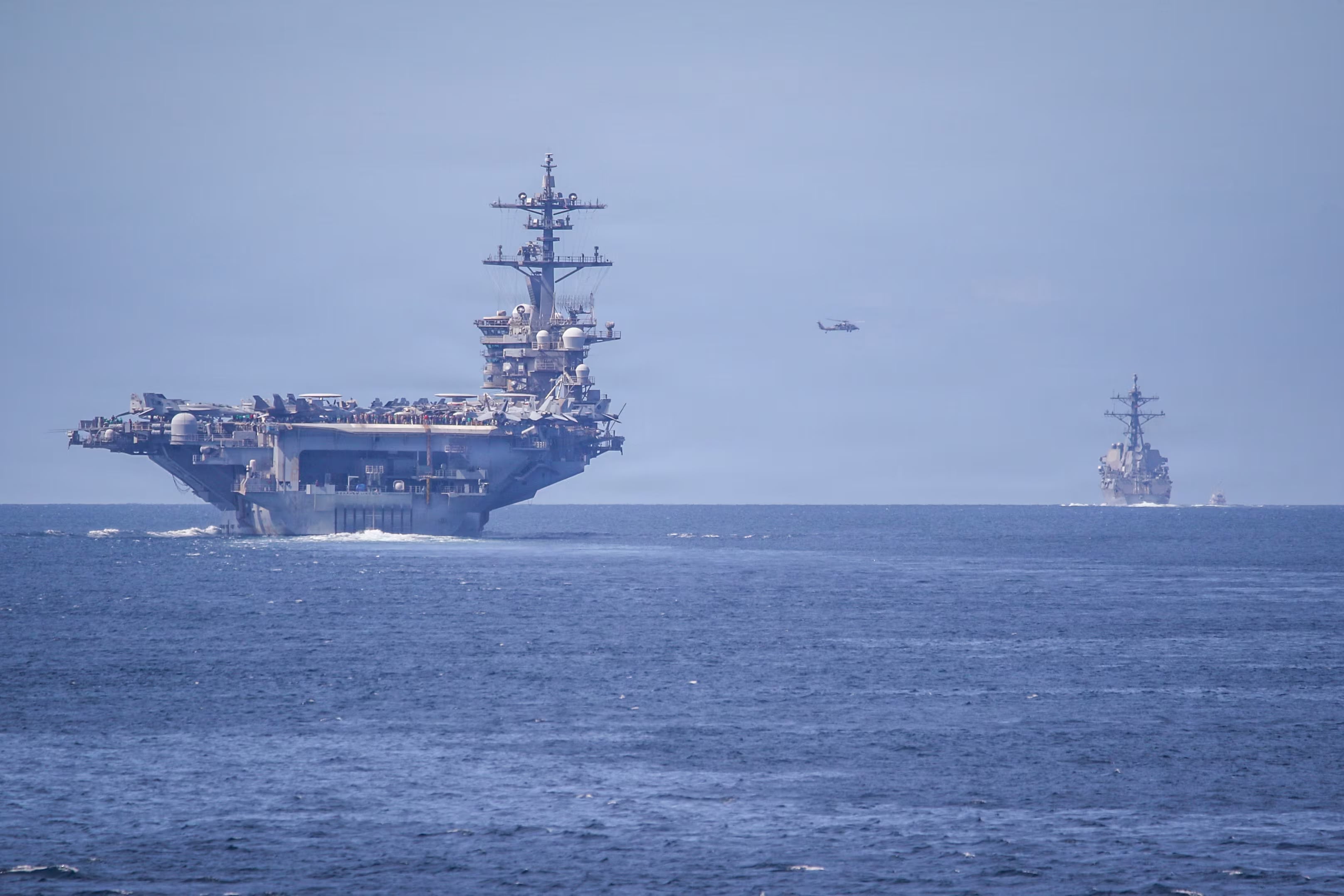
Everyone is watching the diplomacy and the missiles. The thing that will actually end this war is neither. It is a US Navy blockade that started three days ago, and a piece of reservoir physics that most market commentary has not yet worked through.
The argument is straightforward. Iran has roughly thirteen days of onshore storage left. After that, wells start shutting in. In mature fields — which is most of what Iran operates — shut-ins are not reversible. The regime’s petroleum engineers understand this. The negotiating position has already shifted. And if a deal arrives before the capacity damage is done, the market is priced for the wrong outcome on almost every major asset class we care about.
The storage clock
Before the blockade began on Monday 13 April, Iran was exporting around 1.5 million barrels a day. Oil accounts for about 80% of its export earnings and roughly a quarter of government revenue. The blockade zeroes that out overnight — one analyst puts the direct hit at $435 million a day, or $13 billion a month.
The interesting number is not the revenue loss. It is the storage.
Iran has roughly 50–55 million barrels of onshore capacity. Those tanks were around 60% full going into the blockade, which leaves spare capacity of roughly 20 million barrels. At 1.5 million barrels a day of production that suddenly has nowhere to go, that spare capacity fills in about thirteen days. Call it 26 April, give or take. After that, the regime has no choice: it has to start shutting in wells.
This is the point at which the story stops being about cash flow and starts being about physics.
Why you can’t just turn it back on
An oil well works on pressure. Crude sits in porous rock — think of a sponge soaked in oil under enormous pressure — and that pressure is what drives it to the surface. When you stop production, you disturb the equilibrium. Three things tend to go wrong, and in mature fields they tend to go wrong together.
Water from the surrounding formation floods into the reservoir and traps oil in place. Clay minerals in the rock swell and close off the microscopic pores the oil flows through. And the heavier fractions in the crude itself — waxes, paraffin, asphaltenes — cool and solidify inside the wellbore and the gathering pipelines. The simplest analogy is a blood clot forming inside an artery. Clearing it, where it can be done at all, can cost more than drilling a new well.
The time horizon matters. A brief shut-in is usually recoverable. A shut-in of more than a couple of weeks in a mature field can cause permanent, irreversible damage. Most of Iran’s major producing fields are fifty to sixty years old. They already have decline-rate problems. They are already dependent on water and gas injection to maintain reservoir pressure. They are exactly the fields most vulnerable to this kind of damage.
One analyst puts the potential permanent capacity loss at 300,000–500,000 barrels a day, which at current prices is $9–15 billion a year in revenue — gone, not deferred. That is the number the regime’s petroleum engineers will have put in front of the regime’s decision-makers this week.
The economy underneath
It is worth pausing on the condition of the Iranian economy before the blockade, because it sets the context for how quickly this pressure compounds.
The rial has lost roughly 60% of its value since mid-2025. The open-market rate sat at 1.6–1.7 million rials to the dollar before the blockade started. Official inflation was above 47% — food inflation meaningfully higher. The government has just issued its largest-ever banknote: 10 million rials, worth about $7. Prices are up roughly 40% since the war began.
Layer the blockade on top of that. No oil revenue means no hard currency for imports. No hard currency for imports means the rial enters a devaluation spiral. The spiral feeds hyperinflation. Hyperinflation destroys what political capacity the regime has left. This is not a linear chain — each link accelerates the next.
Unlike missile damage, which is expensive but rebuildable, the reservoir damage is governed by physics. It is not rebuildable on any relevant timeframe.
Why the regime’s position has already moved
The question worth asking is: what changed?
Through the military phase of the war — American and Israeli strikes, the steady erosion of Iran’s conventional infrastructure — the regime’s public posture did not meaningfully shift toward negotiation. A ceasefire eventually held because it was in both sides’ interest to stop the exchange, but the Iranian position on the underlying issues remained roughly where it started.
Since the blockade was announced, that has changed. Tehran has offered a five-year moratorium on nuclear enrichment. Washington has countered with twenty. Pakistan is mediating. A second round of talks is reportedly on the agenda within days. The central case is no longer “negotiations eventually grind toward something” — it is an active process with a short timetable and two parties who both have reasons to close.
China has its own incentive to see this resolve. Roughly 97.6% of Iranian seaborne crude was going to China before the blockade, and at a substantial discount to the market. Beijing is not a neutral bystander on the question of whether Iranian exports come back on line.
The probability weighting is worth stating explicitly. Our central case — a negotiated resolution — was running at around 70% through the military phase. It is now meaningfully above that. The escalation scenario (ceasefire collapses, full resumption of hostilities, prolonged closure of the strait) has weakened to something closer to 5%. The “best case” — rapid regime change, full normalisation of Iranian exports — has become less probable simply with the passage of time, but elements of it have started to leak into the central scenario. In particular, the view of where the oil market sits on the other side of this is closer to the upside case than consensus assumes.
The IMF is pricing in the wrong scenario
The IMF’s April World Economic Outlook, published the day after the blockade began, cut global growth to 2.8% for 2026 — half a point off the January print. The UK was singled out as the most vulnerable G7 economy to an oil and gas shock, with growth revised down to 0.8% from 1.3%. Their three scenarios were labelled “weaker,” “worse,” and “severe.” There is no scenario in the framework where the situation improves.
Two days after the IMF’s forecast, the ONS released UK February GDP at +0.5% month-on-month, against a consensus of around +0.1%, with January revised up from flat to +0.1%. If March is flat, Q1 growth alone prints at around +0.7% — a single quarter almost matching the IMF’s forecast for the whole year.
This is not a subtle miss. The IMF has form here. In April 2025 they downgraded their US forecast to 1.8% after the Trump tariff announcements, warning of stalling growth and rising unemployment. The US economy grew 2.1–2.2% for the year. The forecast was quietly revised up later.
The relevant point for investors is not whether the IMF has a house bias toward pessimism on developed economies — that is observable and persistent. The relevant point is that assets priced on the IMF’s pessimistic scenario are priced on the wrong scenario. If the blockade forces a faster resolution than the diplomatic timetable suggested, the forecast is stale before the PDF is opened.
What this means across asset classes
There are two timeframes worth thinking about separately.
Short term. If a deal materialises around the 21 April ceasefire expiry — or during a two-week extension, which looks the most likely near-term outcome — the energy premium unwinds. Brent has already moved back from its peak without returning to pre-war levels, which reflects markets starting to price the central scenario without fully committing to it. Equity markets have recovered meaningfully; bond yields have come off their war-spike highs. The rotation since the war started — defensives, energy, and mining outperforming while rate-sensitive and economically-geared names have been sold — has been sharp. On a resolution, that rotation has scope to reverse at least as quickly as it ran.
UK equities are the most interesting trade in that reversal. The market has priced the IMF’s worst-case frame, valuations are depressed, and the underlying economic momentum going into the war was better than consensus believed. The Bank of England is unlikely to cut at the next meeting — they tend to weight bad inflation news more heavily than good, and the timeline is tight — but Bank rate cuts through the summer are back on the agenda once the energy shock passes through. Wage settlements are moving down. The labour market is softening. The path to lower rates is opening, not closing.
Longer term. Even with a deal, Iran’s production capacity may be permanently lower by several hundred thousand barrels a day. That is the downside case on reservoir damage. On the other hand, the same war that has disrupted supply has also accelerated a policy shift in oil and gas-producing democracies. Canada’s energy minister has just committed to increased oil sands production on efficiency grounds. Mexico’s president has signalled a reversal of the fracking moratorium to reduce import dependence. Even left-leaning governments are backing away from supply restrictions once the social and political cost of energy inflation becomes visible.
The structural picture on the other side of this is probably a more oversupplied oil and gas market than the one that existed before the war, not less. Iranian capacity may come back at 1–2 million barrels a day higher than its recent run-rate, selling into a broader set of buyers than just China. US, Canadian and Mexican production steps up. The supply response to the shock outlasts the shock.
For the UK specifically, the IMF is right about one thing and wrong about everything else. The right bit: Britain’s energy policy — import dependence for gas, underexploited North Sea reserves, reliance on Norwegian supply at a premium — creates a structural vulnerability to energy shocks that most peers do not share. The wrong bit: the forecast treats that vulnerability as a near-term growth problem when the more interesting question is whether the policy itself survives the next shock. The political climate on energy is shifting across the West. It is likely to shift here too.
What to watch over the next week
- 21 April. Ceasefire expiry. A two-week extension is the most likely outcome; collapse is the tail risk.
- Brent trajectory. The right data point for how much of the central scenario the market is pricing. A sustained move back below the pre-war range would indicate investors are now positioning for resolution rather than hedging against collapse.
- UK CPI and labour market data next week. The next test of whether the inflation picture is as sticky as the IMF assumes. Our view is that the February-to-April inflation tick will be temporary and peak lower than 4%.
- Pakistan talks. If a second round of talks is confirmed and the timetable holds, the economic weapon will have done most of its work before 26 April.
The central point
The market has been pricing a war. The war is already being resolved, and the mechanism is economic rather than military. Iran is under more pressure than Western consensus believes. China needs the oil flowing. The IMF is anchored to a scenario that is being overtaken by events. The Bank of England is behind the curve on the direction of inflation and rates.
This is the kind of setup that tends to produce sharp, asymmetric moves when the resolution arrives — because the institutional forecasters cannot pivot as quickly as the news, and the consensus repricing happens over weeks rather than on the day.
The asset implications follow from that, not the other way around.
This note draws on the 17 April 2026 episode of The Noise Cancelling Podcast. Nothing here constitutes investment advice or a recommendation.
The thing that will end this war is not diplomacy or military strikes. It's a US Navy blockade that started three days ago, and a piece of reservoir physics that most market commentary has not worked through.
Iran has roughly thirteen days of onshore oil storage left before the tanks are full. After that, wells have to shut in. In mature fields — which is most of what Iran operates — a shut-in lasting more than a couple of weeks can cause permanent damage. The regime's petroleum engineers will have told them that. Tehran's negotiating position has already shifted: a five-year moratorium on nuclear enrichment is on the table, Pakistan is mediating, and a second round of talks is imminent.
My central case — a negotiated resolution — is now meaningfully above 70%. The escalation case is down to around 5%.
The IMF, meanwhile, published its World Economic Outlook the day after the blockade started, and it is priced for the wrong scenario. They cut UK growth to 0.8% — two days before the ONS printed +0.5% GDP growth in February against a +0.1% consensus. They have form for this. The US forecast miss in 2025 was a full 30 basis points.
If a deal lands around or after the 21 April ceasefire expiry, the energy premium unwinds, equity markets reprice the post-war world, bond yields fall further, and Bank of England rate cuts come back onto the agenda for the summer. The longer-term picture is a more oversupplied oil and gas market than existed before the war — Canada, Mexico and others are stepping up production as the political cost of energy restriction becomes visible.
UK equities are where the asymmetry is largest. The market has priced the IMF's worst-case frame. Valuations are depressed. The underlying momentum going into the war was better than consensus believed.
This note draws on the 17 April 2026 episode of The Noise Cancelling Podcast. Nothing here constitutes investment advice or a recommendation.
Related posts

Subscribe to receive Woodford Views in your Inbox
Subscribe for insightful analysis that breaks free from mainstream narratives.